
Facebook Pixel Tracking

A.H.L.C.

Which Report Led to Safer Recruitment?

Understanding the Bichard Inquiry and Its Lasting Impact.

At A.H. Lancer Consulting (AHLC), we often explore how moments of failure in safeguarding have reshaped the systems that now protect children. Safer recruitment is one of those systems — a process so embedded in daily practice today that it’s easy to forget how new it really is.

The turning point came in the early 2000s, after one of the UK’s most devastating child protection failures. The Bichard Inquiry, launched following the Soham murders, forced the country to confront uncomfortable truths about recruitment, vetting, and communication between agencies. Its legacy still underpins how every children’s service recruits and monitors staff today.

The Bichard Inquiry: Lessons Written in Law.

The 2002 Soham murders — where school caretaker Ian Huntley murdered two young girls, Holly Wells and Jessica Chapman — exposed critical weaknesses in how organisations recruited and vetted staff. Despite known allegations of sexual offences, Huntley was employed in a school.

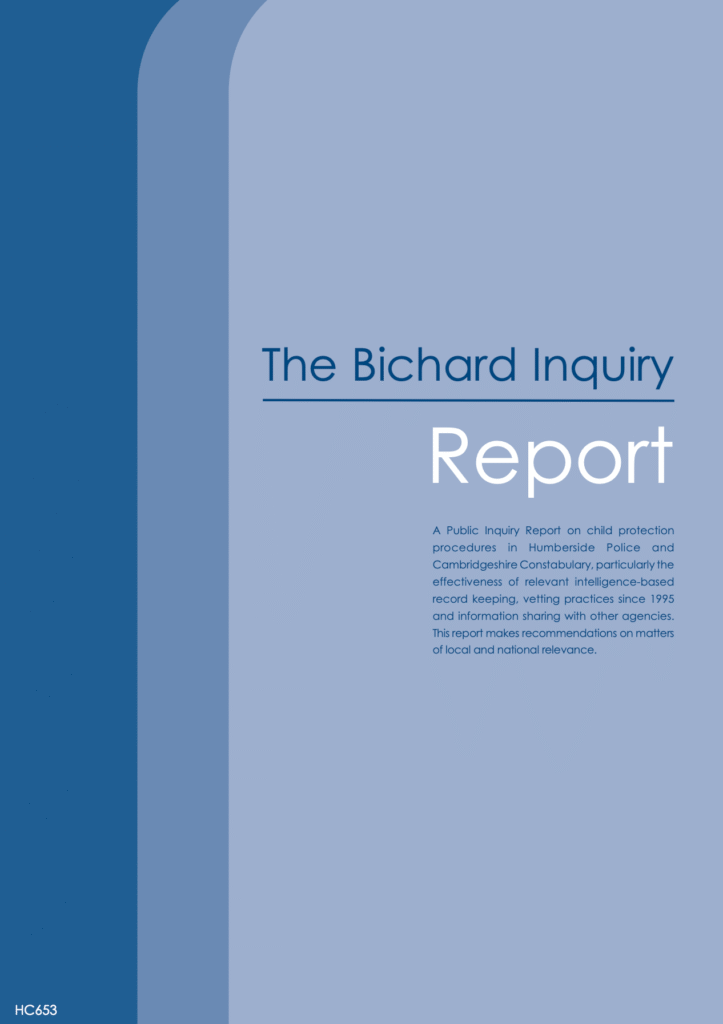
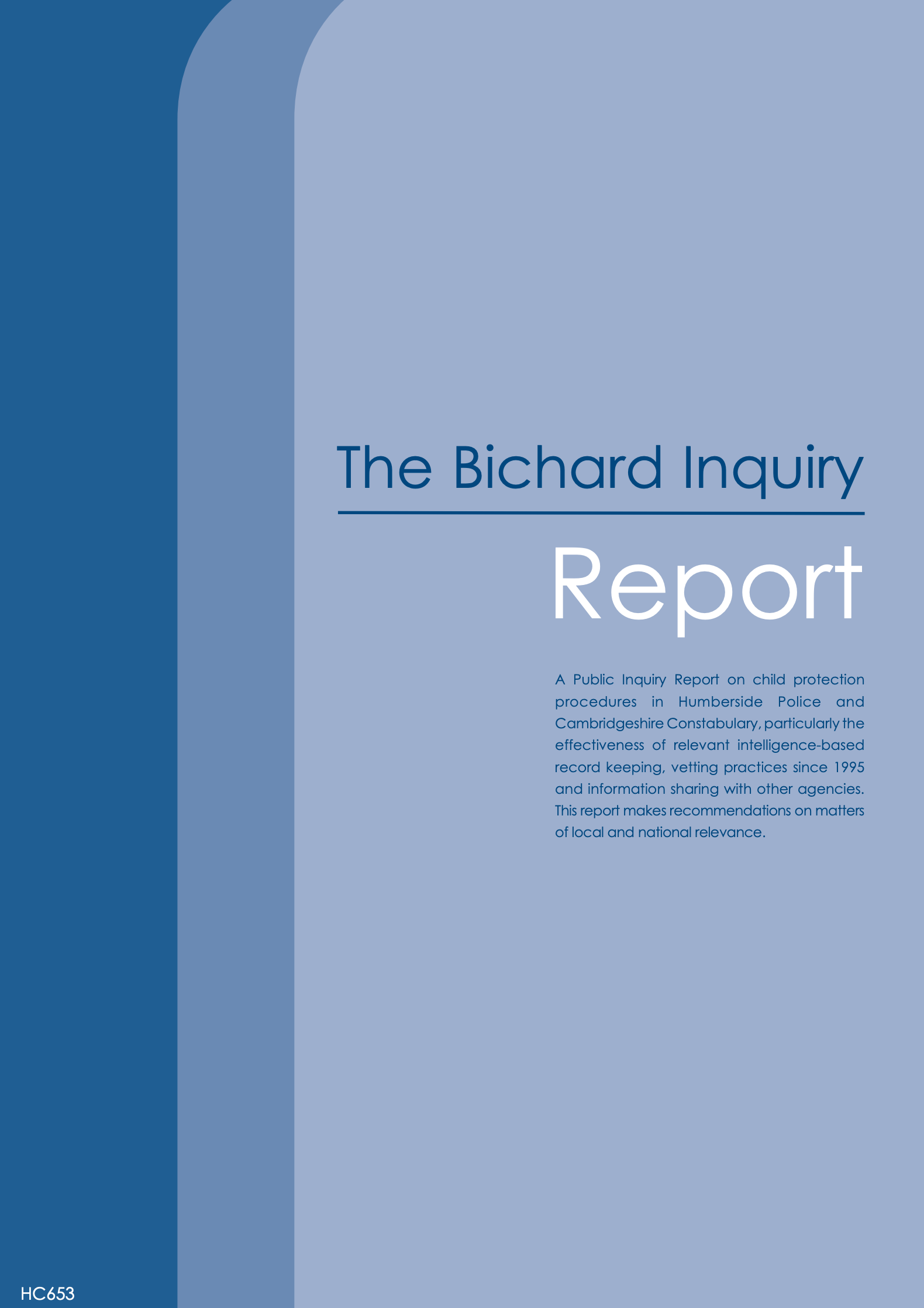
The Bichard Inquiry, led by Sir Michael Bichard, was tasked with finding out how this could have happened. Published in 2004, the report revealed a patchwork system of record keeping and poor information-sharing between police forces and employers. Safeguarding decisions were being made with incomplete, inconsistent data.

Sir Michael Bichard’s report made 31 recommendations — covering recruitment, vetting, police intelligence, and inter-agency communication. The most significant outcome was a call for a national system to stop unsuitable people from working with children.

Read the full report: Bichard Inquiry Report (PDF)

The Safeguarding Vulnerable Groups Act 2006.

The inquiry’s recommendations paved the way for the Safeguarding Vulnerable Groups Act 2006, which formalised a national vetting and barring scheme. This legislation created the Independent Safeguarding Authority (ISA) — now part of the Disclosure and Barring Service (DBS).

The Act aimed to prevent individuals deemed unsuitable from ever gaining access to children or vulnerable adults through regulated work. For the first time, there was a clear legal mechanism for employers to check and share information about risk.

In simple terms, safer recruitment moved from being a “best practice” concept to a statutory expectation. Every provider, from schools to children’s homes, now had a legal and moral duty to verify suitability before employment began.

The Creation of the Disclosure and Barring Service (DBS).

Following the Act, the government introduced the Disclosure and Barring Service (DBS) to bring together the former Criminal Records Bureau (CRB) and the ISA. The DBS allowed employers to carry out criminal record and barred list checks more efficiently — a crucial safeguard for those recruiting staff to work with children.

These checks go beyond simple background screening. They verify whether an individual is legally permitted to work in certain roles and highlight any information suggesting risk. While no system can completely remove human error or deception, the DBS has made it significantly harder for unsuitable individuals to move undetected between jobs or local authorities.

Changing the Culture of Recruitment.

The Bichard Inquiry didn’t just lead to new processes — it changed attitudes. Recruitment shifted from trust-based assumptions to evidence-based verification. References became more thorough. Record-keeping became a core compliance activity rather than a formality.

Today, safer recruitment is an expectation within every inspection framework. Ofsted evaluates not just whether checks are done, but whether providers understand their purpose — ensuring that staff selection prioritises safety and integrity over convenience or familiarity.

At AHLC, we often remind providers that safer recruitment isn’t just about avoiding unsuitable appointments. It’s about creating cultures of vigilance, reflection, and shared responsibility. The principles apply at every level — from trustees and directors to admin staff and volunteers.

Reflections from the AHLC Team.

Two decades later, the lessons from Soham remain painfully relevant. Systems have evolved, but the human factors – trust, haste, assumption – still test even the most diligent provider.

The Bichard Inquiry gave the sector a structure for prevention, but prevention only works when curiosity and accountability stay alive. It means questioning vague references, ensuring checks are up to date, and having the courage to challenge decisions that don’t feel right.

At AHLC, we support children’s homes and social care providers to embed these principles through:

Because safer recruitment isn’t a form to complete — it’s a culture to protect.

Final Thought.

The Bichard Inquiry stands as one of the most significant catalysts for change in modern safeguarding. It taught the sector that safeguarding failures rarely occur in isolation; they are nearly always systemic.

By remembering where safer recruitment came from, we maintain its purpose — to ensure that children’s safety isn’t assumed but actively safeguarded through careful, informed, and accountable leadership.

Want to make safer recruitment feel less like a checklist and more like confidence in your team?

At AHLC, we help providers put the right systems in place — not just to stay compliant, but to feel assured every step of the way. From DBS audits to mock inspections and policy reviews, we’re here to make sure safer recruitment works in real life, not just on paper.

📩 Let’s chat about how we can support your team by contacting us at AHLC today!

I am a manager of a children’s home, currently in the process of registering with Ofsted. A.H.L.C. have supported us throughout this journey, providing guidance every step of the way. Anthony and his colleague Kay have been extremely professional and clearly know their field, offering expert advice on what’s needed when planning a new provision.
Summary
Which Report Led to Safer Recruitment?
Article Name
Which Report Led to Safer Recruitment?
Description
Discover how the Bichard Inquiry following the Soham case transformed safeguarding in the UK—leading to the Safeguarding Vulnerable Groups Act 2006 and the creation of the Disclosure and Barring Service (DBS).
Author
Publisher Name
AHLC - AH Lancer Consulting
Publisher Logo
Leave a Comment

Your email address will not be published. Required fields are marked *

Scroll to Top
AHLC Web Logo 250

Data improves your experience Cookies

In order to enhance your experience and show you more relevant information, we use cookies and similar technologies to improve your experience and analyse traffic.


By continuing, you agree to our use of cookies.
Please have a look at our Privacy Policy for details.